Schubert, Friendship, Summer, and Midwest Democratic Primaries
NOTE: I am now publishing these essays at my new Substack. If you wish to receive these in your inbox, please subscribe via the button below!
By The Lake
Into the lake’s play of waves, through the sunlight, stars, O so manystars, fall ceaselessly, flaming, gleaming. If man becomes a lake, stars, O so many stars, will fall from the gates of heaven into the play of waves within his soul.
— Franz von Bruchmann (trans. Richard Wigmore)
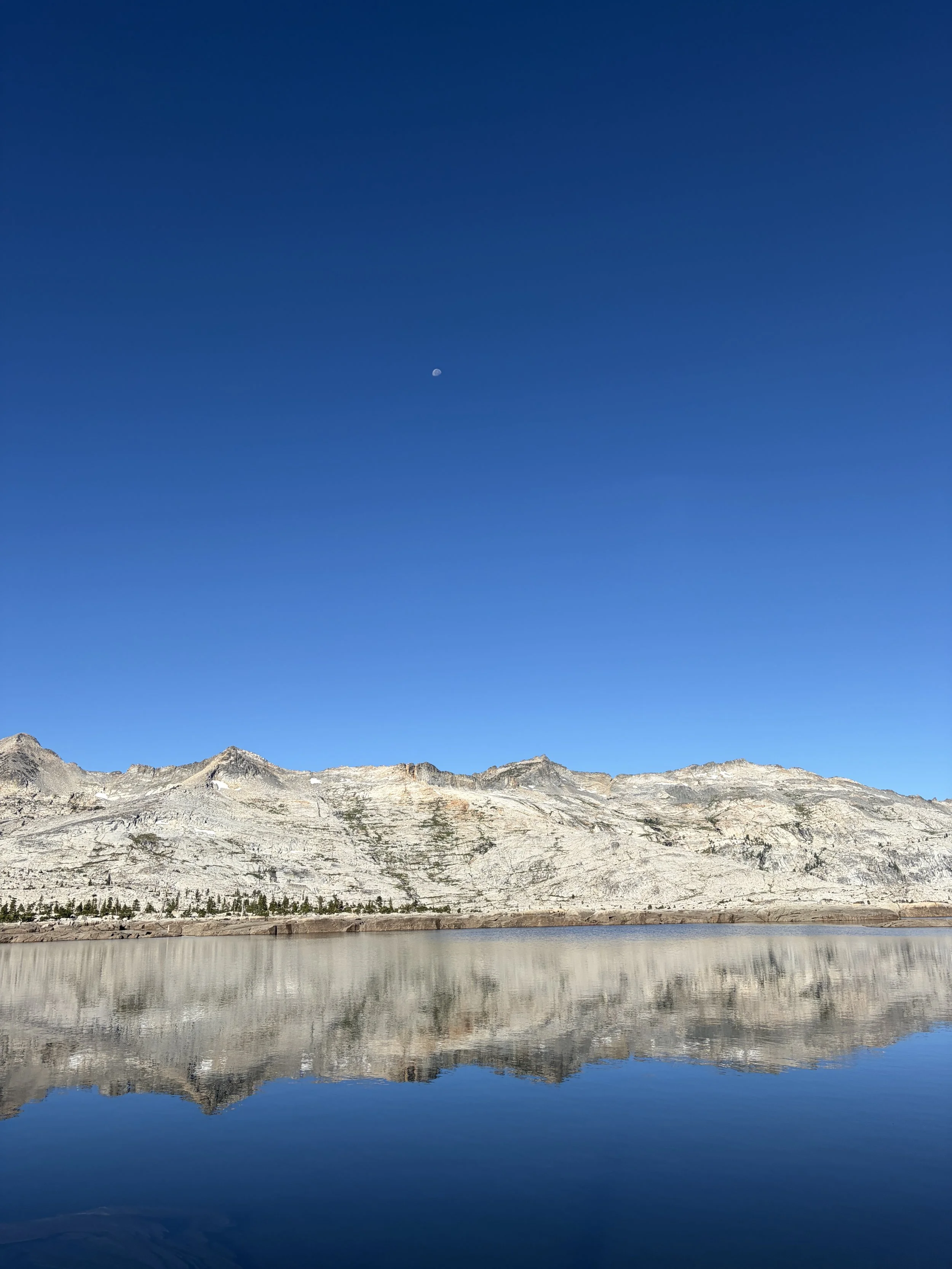
Lake Aloha, Desolation Wilderness
In my experience, summers are traditionally the season of festivals, which involve an even more intense pace of travel and wider variety of repertoire than are usually encompassed in the season proper. As audiences decamp to their usual summer retreats, we performers follow them to more rural and rustic locations, finding ourselves performing in all sorts of unusual conditions ranging from outdoor stages, to hybrid indoor-outdoor spaces, to non-traditional indoor venues. In between festivals and extremes of repertoire both known and unknown to me, I managed to get a few days of backpacking in, camping for a couple of nights at Lake Aloha in the Desolation Wilderness. My nights by the lake got me thinking about Schubert’s song, Am See. The yearning in Schubert’s song when the singer wishes, “If man becomes a lake,” is something I am finding deeply relatable as I try to take in and absorb the huge variety of experiences I’ve had over the course of the summer. The song is naturally on my mind, as it is featured on my most recent album, Lamenting Earth, and the circumstances of this recent escape into the wilderness have unexpectedly made the Lied my own personal song of the summer.
I have a text thread with an overachieving group of friends from my childhood that keeps us connected despite being spread out over six states. While many childhood connections fade as we grow into adulthood, these are friendships forged during my adolescence in Ann Arbor that have only deepened over the decades into the bonds of a chosen family. Most of the group is based back in Michigan, having moved home after years away in bigger cities on the coasts; the rest of us are scattered across neighboring states or settled on either coast, our hearts still somewhere in Michigan. The adage stands true: you can take the boy out of the Midwest, but you can’t take the Midwest out of the boy.
The text thread went into overdrive the other day as the results of the Michigan primary became official. The thread leans left, and we fall on various parts of the current spectrum of that side of American politics. Each of us cares deeply about the American political experiment from our various vantage points, some as concerned and engaged citizens, others more directly engaged in the gears of the political machinery. One of us even ran for office in this election, eventually suspending their campaign at an early stage in the cycle, throwing their support behind one of their colleagues.
As election results became clear, I was fascinated to read everyone’s viewpoints, which were more municipal, more localized, and more personal than the version of this same debate the news media is currently reporting nationwide. Some were heartened by certain wins for the progressive wing, whereas others were disappointed their chosen, more “establishment” candidates did not win. Some expressed a skepticism at the public faces posed by some of the primary victors, and much worry was voiced about the tensions around the outsized role Middle Eastern politics was playing in this particular state with its sizable Arab American and Jewish American populations. The media seems to relish headlines describing the Democrats as experiencing a “rift,” framing the moment as an existential battle between so-called “progressives” and “moderates” for the future of the party. It’s a fraught narrative built to bait clicks, to get emotions roiling and our raging thumbs scrolling, and it was easy to recognize the shape of that larger framing in the intensity of our own small debate.
I recently wrote an essay for Chamber Music America’s magazine about how musicians grapple with intense debate daily due to the the nature of our art, and how music can model the preservation of true dialogue in public life. I ended that essay with the following thought:
“At its best, chamber music models the democracy we aspire to in civic life. When it’s working, each voice matters. No one voice can dominate without destabilizing the balance. Every phrase, every entrance, every silence is negotiated communally. Chamber music reminds us that conversation is not about winning or overpowering, but about co-creating meaning together: multiple and diverse voices in dialogue, shaping something greater than any one of us could achieve alone.”
The way my friends and I gingerly expressed opinions while working to respect each other’s viewpoints reminded me of the hopes for healthy discourse embedded in that essay, which represents a line of thinking that has been at the forefront of my mind the last few years since our lives shifted so sharply online during the isolated year-plus of the pandemic lockdown. As we have witnessed the world’s public square devolve into an online comments section stretching into infinity, it has reaffirmed another, more vulgar adage: opinions are like assholes, everyone has one, and most people think everyone else’s stinks.
Even holding that in mind, the stakes in this debate are real and outline a valid tension between vision and electability. It is a fair and important debate to question how the party’s vision is defined as it seeks its current crop of electable leaders. Militarized ICE agents purported to be “protecting the border” murdering American citizens and legally-documented immigrants in Minnesota and Maine, the pervasive use of what are arguably concentration camps to jail immigrants, the current administration’s efforts to redefine birthright citizenship, and to open pathways for federal interference in state and local elections, are all real enough on their own to make it feel as though the foundations of constitutional democracy are on the line with each passing election. The high stakes have made the debate riveting to witness and participate in as an engaged citizen, and very watchable as punditry and armchair quarterbacking. But among all the words being used to frame it (existential, power struggle, reckoning, fight for control), the one I find missing is healthy.
Many argue that the Democratic party’s biggest challenge right now is remaining a “Big Tent” that encompasses the full spectrum of the American Left. As debates rage about electability, vision, purity politics, and whether to dispense with “woke,” the focus stays on the danger these arguments pose to the party’s cohesion, rather than on the vision they might offer. Nowhere is anyone pointing out that this kind of comprehensive, robust debate is precisely the point: the ability to express dissent and hold multiple perspectives at once is the very thing Democrats should be fighting to defend, and what better way to model it than through a robust primary. This is what it means to be a Big Tent…or to be like Schubert and Bruchmann’s lake in Am See.
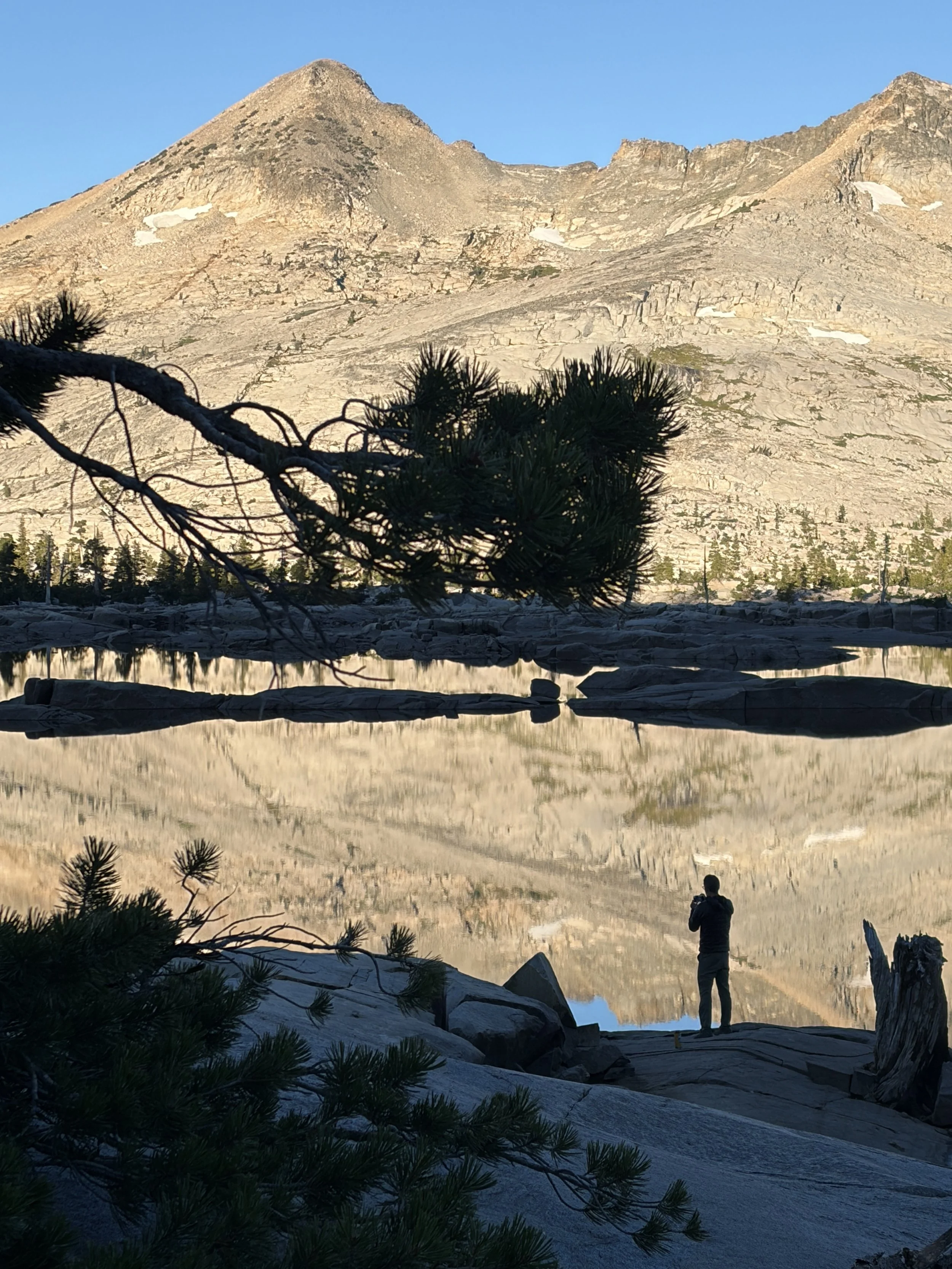
Lake Aloha, Desolation Wilderness