Coleridge-Taylor, Stravinsky, Orff, and American Identity
NOTE: I am now publishing these monthly newsletters here, mailing more comprehensive newsletters via MailChimp, and also publishing them at my new Substack. If you wish to receive these in your inbox, please subscribe via one of the buttons below!
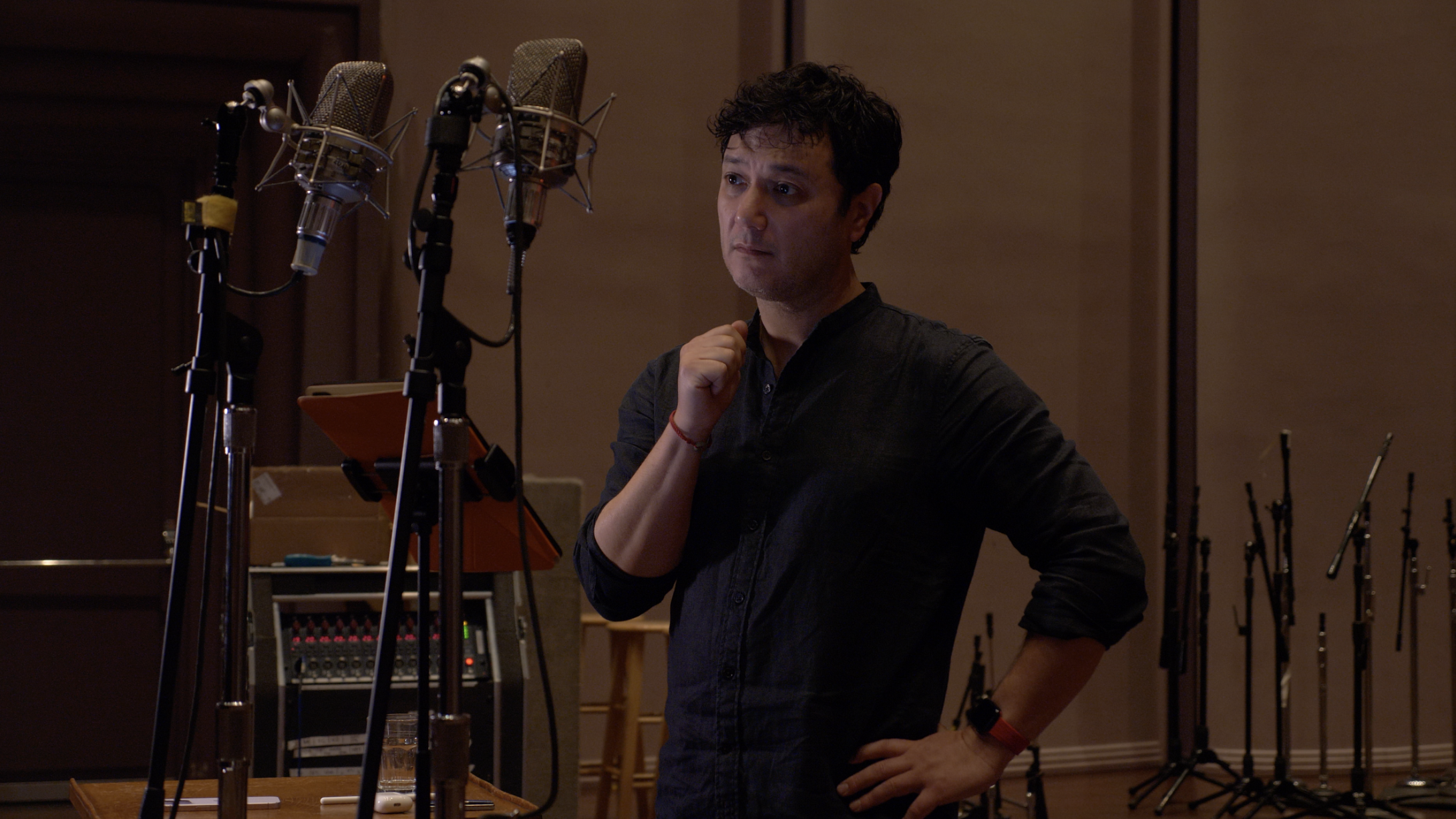
Recording at Skywalker Sound in Marin County, CA
A JUNE 2026 Newsletter
I think I struggle with patience the way most people do in our technological age in which time feels like an increasingly scarce and valuable commodity. The month of May found me mired in a treasure trove of challenging music that was completely new to me. After meditating about the master always being the student, I found myself repeatedly working to find the grace to be a beginner, which was perhaps more of a challenge than the actual task of learning the endless streams of notes, rhythms, and words I was trying to embed into my neural networks.
The further one progresses in a career, the more difficult it can be to maintain the discipline to methodically begin the learning and studying process at ground zero. When confronted with a pile of new music to learn, I am too often tempted to simply dive in headfirst and combine multiple components of the learning process. I often tell people that I am cursed with a curious mind, and it seems that a side effect of that is that I am a greedy and impatient student. Sometimes, I escape these hurried study processes unscathed, and my headfirst dive manages to enter the water without much of a splash, scoring a perfect 10. At other times, in my eagerness to climb the staircase of study three steps-at-a-time, I trip and fall flat on my face, making everything more difficult and painful than it needs to be, adding unnecessary time to the process as I pause to recover, lick my wounds, and sort myself back out before resuming my climb.
The music May held forced me to find the discipline to move one step at a time, not only because of the musical and vocal challenges it presented, but also because of the sheer volume of things that needed to be learned and the rapid pace of succession of each performance deadline. In order to preserve my mental health and keep anxiety at bay, I had to be diligent and methodical, consuming bite-sized chunks at a slow and steady pace, rather than gorging myself as part of a musical binge.
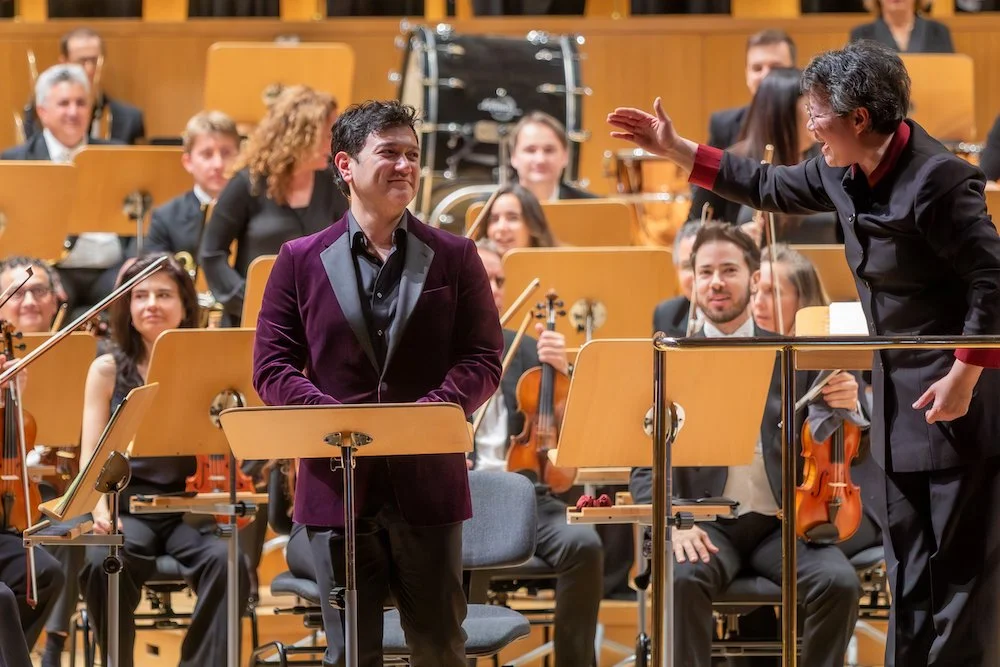
Performing Hiawatha’s Wedding Feast with ORCAM and conductor, Mei-Ann Chen in Madrid, Spain
My first concert of May was Hiawatha’s Wedding Feast by the British composer Samuel Coleridge-Taylor in Madrid. Based on Henry Wadsworth Longfellow’s epic poem, The Song of Hiawatha, the work was one of the most popular and most-performed oratorios of the first half of the 20th century. A fictionalized narrative of Native American characters, Longfellow’s poem was heavily criticized when it was published for portraying its Indigenous characters with too much nobility–The New York Times’ review of the poem, in particular, is pretty scathing in this regard, betraying the bigoted colonial bias that went largely unexamined at the time. Still, as progressive as Longfellow seems to have been in his intentions, it is difficult to look past his own implicit colonial biases as he solidified a new trope in Hiawatha: the noble savage.
To be completely honest, it took me a while to get past the barrier of the multiple layers of colonialist lenses endemic to this piece (Longfellow’s American, and Coleridge-Taylor’s British). As I studied my aria that features towards the end of the work, I found myself disconnecting from the story and the words out of discomfort with the subject matter, and it suddenly became an exercise in simply trying to sound beautiful with no meaning to buttress the beauty, which is the stuff of nightmares for me as a singer. I eventually managed to get past this block and give over to the piece, which I must say is a masterfully composed work. It was a stark reminder that as a performer, our job is not really to judge the work, but to do what we can to be a conduit for poet and composer’s intentions. The more we critique and analyze, the more we get in our own way, which again ties into the necessity of simply putting one foot in front of the other so as not to trip over ourselves and stymie the flow.
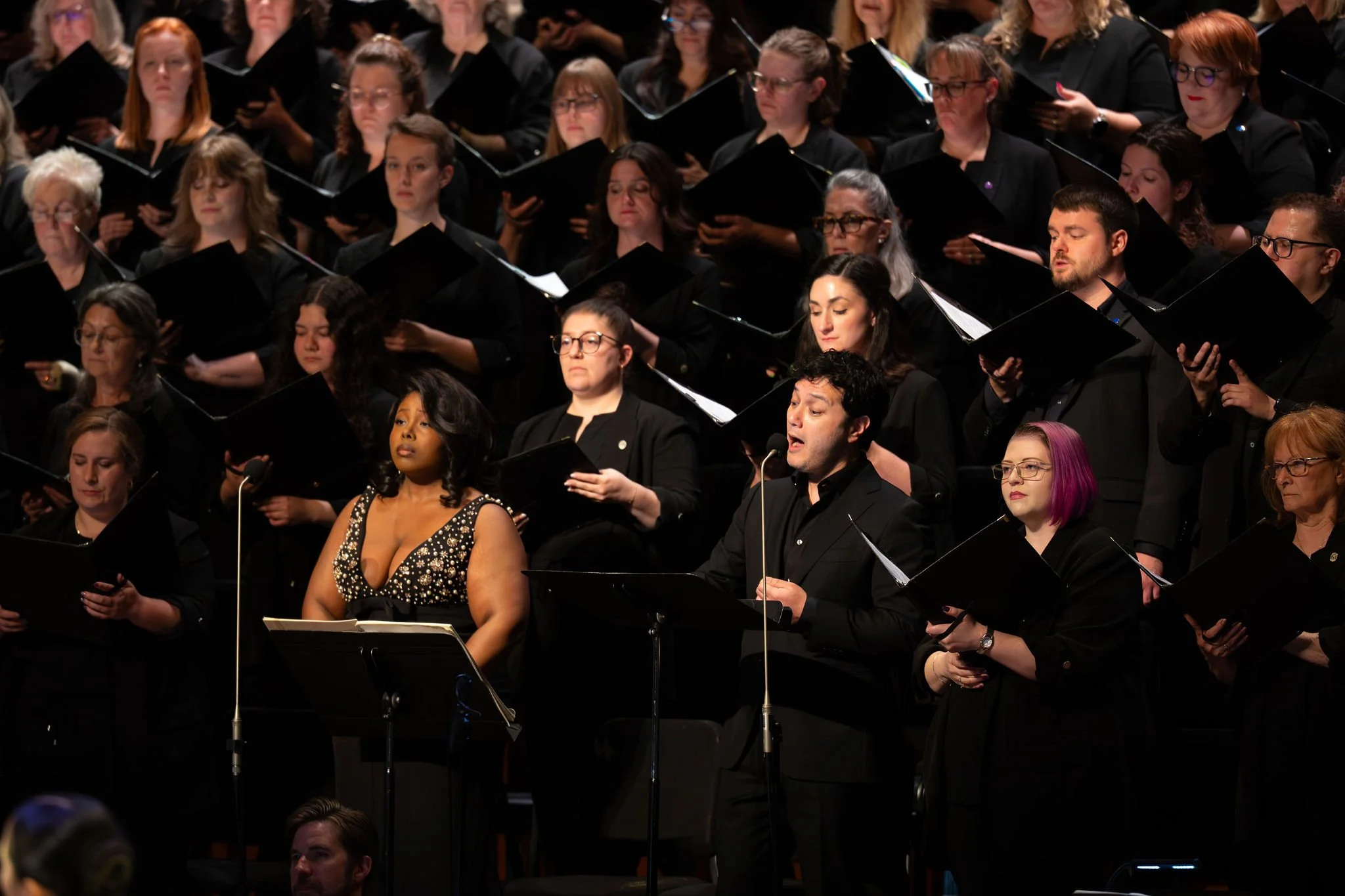
Performing Orff’s Catulli Carmina with The May Festival in Cincinnati, OH
Shortly after Madrid, I found myself performing both Igor Stravinsky’s Les noces and Carl Orff’s Catulli Carmina for the very first time. Similar to Longfellow / Coleridge-Taylor’s Hiawatha, both of these pieces make a foray into folk and ritual traditions. Even though he is setting erotic poetry of the Roman poet Catullus, Orff forcibly pushes past any instinct to analyze by using chant-like techniques to convey the text and creating a sort of faux-folk energy through the earthy, punchy rhythms he employs. Les noces portrays a traditional Russian peasant wedding celebration, and it’s filled with musical phrases that mimic Russian folk dance rhythms and Russian Orthodox liturgical music. Stravinsky was clearly prioritizing distilling an essence of “Russian-ness” as he composed it, and after its premiere with the Ballets Russes, the impresario Serge Diaghilev famously declared the work Stravinsky’s “most Russian”. Both pieces feel like intense half-marathons of music (there are precisely zero measures of music that have no singing in Les noces), and it was energizing to give over to their ebullient, raw energy in Cincinnati alongside the excellent May Festival Chorus.
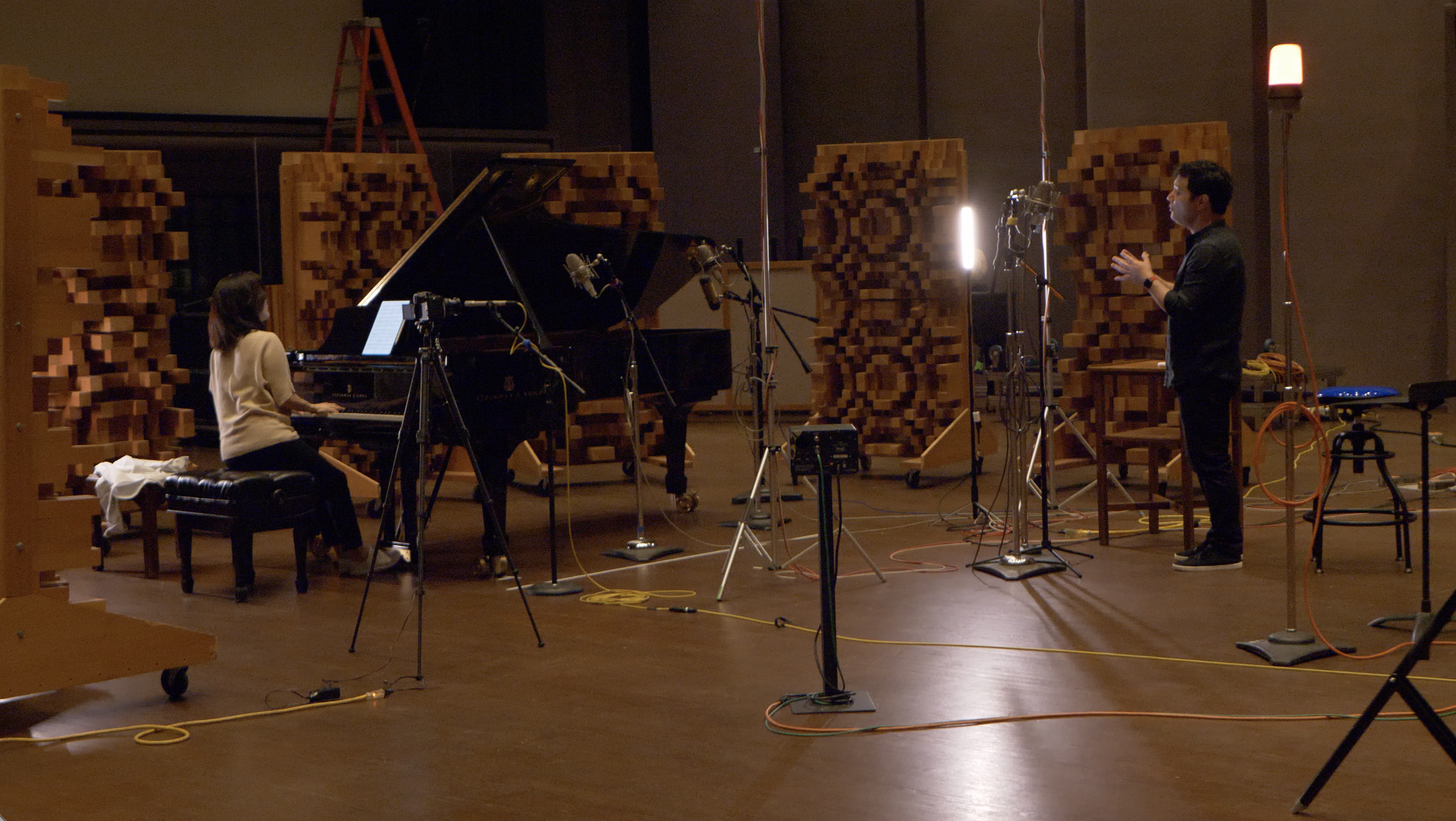
Recording Shawn Okpebholo’s The Beautiful at Skywalker Sound with Myra Huang
Following Cincinnati, I re-joined pianist Myra Huang in the idyllic recording studios up at Skywalker Sound in Marin County, CA to record a world premiere song cycle by composer Shawn Okpebholo entitled The Beautiful. The cycle will have its world premiere as part of a recital I am performing at Tanglewood with Myra in July, and will also feature on my next album, which will be released in November. In collaboration with poet and author Tsi Tsi Jaji, Shawn has assembled a moving, five-song cycle that meditates on American identity. Shawn writes about the piece, “the cycle traces a journey through five movements, each offering a distinct vantage point on what it means to be fellow citizens—especially in a nation built through migration, displacement, and continual reimagining.” Navigating the various perspectives explored in Shawn’s freshly-composed cycle, it was impossible to ignore the parallels and direct connections to this turbulent socio-political moment in which we are living. Chatting with Myra at the end of our recording sessions, she said to me that it felt really special to be immersed in something so current and to be able to identify so directly with the material.
Somehow, a month of seemingly disconnected and random projects that only seemed to share the fact of their new-ness to me coalesced into a monthlong meditation on identity, and how it affects the ways we not only see others, but ourselves, as well. For me, Shawn’s piece is the latest step on my journey to understand what it means to me to be an American, as the nation continues in its messy ways to define its identity, who belongs, and who doesn’t.