Always Amateurs
Cycles of Music and Mentorship
NOTE: I am now publishing these monthly newsletters here, mailing more comprehensive newsletters via MailChimp, and also publishing them at my new Substack. If you wish to receive these in your inbox, please subscribe via one of the buttons below!
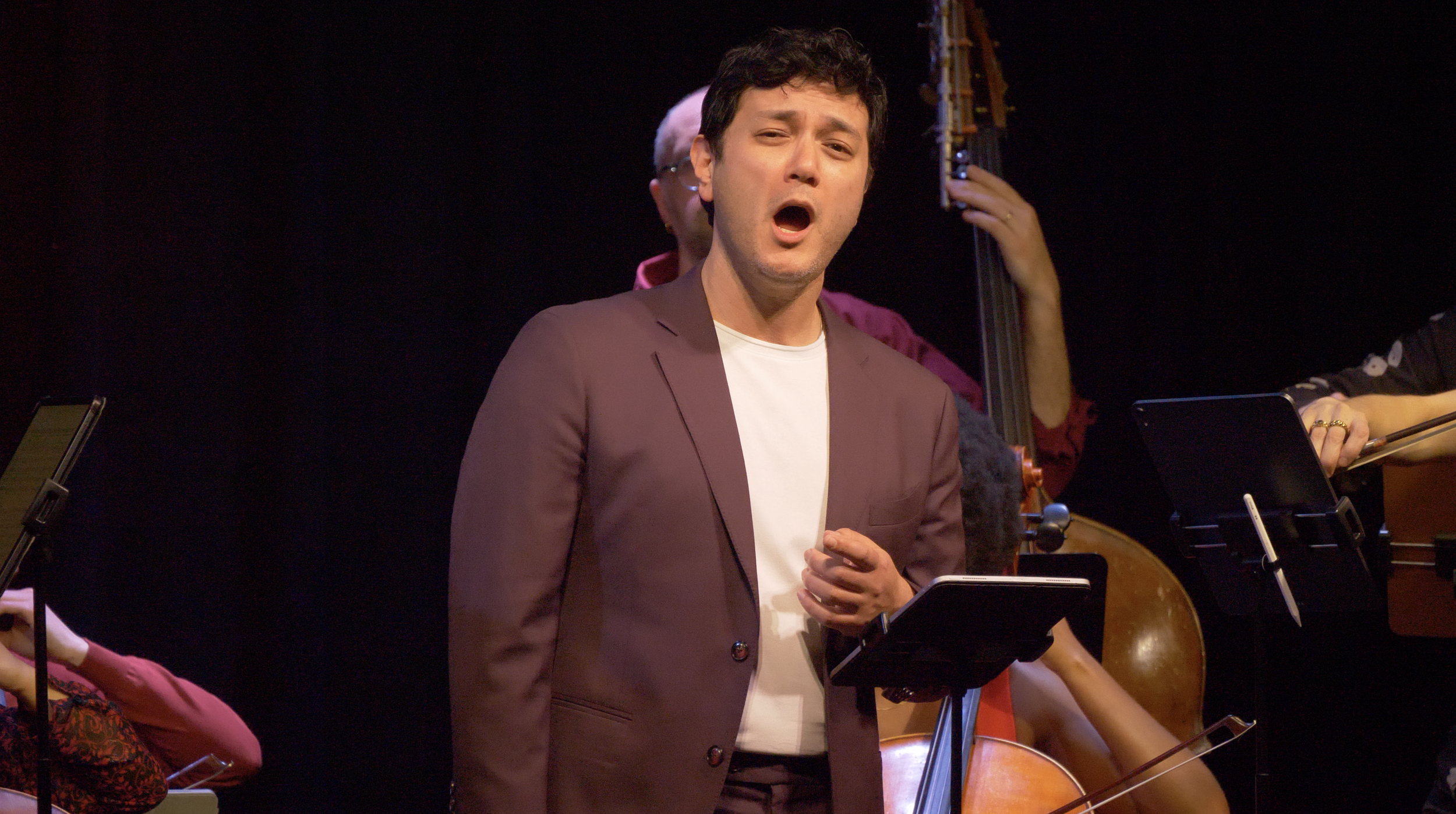
performing A Change Is Gonna Come with Palaver Strings at the Cabrillo Festival / Kuumbwa Jazz Center in Santa Cruz, CA
A MAY 2026 Newsletter
There is an adage that was somewhat prevalent when I was in my student days as a musician that went along the lines of: “Those who can’t do, teach”. I’ve always thought there was something deeply wrong with this line of thinking. It just felt like a way for insecure people to tear down the work and abilities of others. A way of putting down others in order to aggrandize oneself.
Of course, as I have begun to increasingly incorporate teaching and coaching others over the years, I have discovered there is some truth to this phrase. Every season, I encounter phenomenally talented young artists who can do things that I could never dream of doing vocally-speaking — and artistically-speaking. And yet, my physical inability to do those things does not prevent me from being able to help them figure out how to make whatever choices might be best for them and to help them technically navigate the potential pitfalls that might lie within their repertoire that I can only dream of singing in my shower. In a way, my inability to do those things gives me a birds-eye view that can help offer different perspectives as part of my teaching, which can be of great value to the student. And, even though we may be specializing in different repertoires, there is a tremendous amount of common ground when it comes to the technique of singing, no matter the voice type. As I have gained more and more experience as a teacher and coach, I have come to see that there is a bit of humility baked into that adage about teaching, when deployed with good intentions.
The aphorism I have always felt much more magnetically drawn to is the one that reminds us that “the master is always the student”. I felt keenly aware of that at the beginning of April, as I ushered the current second-year class of Adler Fellows at the San Francisco Opera through the recital that features as one of the pinnacles of what is, for most of them, the terminal stage of their young artist training. I always find it fascinating to work with artists at this stage of their development, just proverbial minutes before they “launch” into full-fledged professional free fall. Because of the timing of this project in the context of their career trajectories, as we work together on their recital repertoire, it is inevitable that we have to navigate the complex and overly lush gardens of their anxieties, fears, excitement, and curiosities as they prepare to be pushed out of the nest and take flight. It is an interesting moment in which to encounter them as a coach, because they already know so much, while simultaneously not knowing how much they already know. At the same time, they are being immersed in a corner of the repertoire and performance format they often know little about. There are so many skills to master as an opera singer — singing, acting, languages, movement, diction, the list goes on. As the ultimate collaborative art form, in addition to the librettist and the composer, there are also many bosses to report to, including the conductor, the director, oftentimes a choreographer, their assistants, not to mention the opera administrators and production staff who make these complex productions work. As a result, much of an opera singer’s training is quite necessarily focused on learning how to follow directions. One of the things I relish the most in working with young artists on their recital repertoire is that it’s an opportunity to teach singers and pianists how to make well-informed choices for themselves, and how to ask a question that there often feels there is little room for in the opera house: “what do I want to say?” It’s surprisingly a bewildering proposition to be faced with as a young artist. I am constantly surprised at how daunted many are by the question, and I am also always moved by how liberating it can feel for a young singer or pianist to find some of those answers for themselves for the first time and sprout artistic wings so they can take flight on their own, without being pushed. It’s an incredible privilege to be a part of this important developmental period and to witness those moments of epiphany. As much as I hope I am helpful to these younger people, I learn tremendous amounts from them as we work, and it feels fitting that the next time I will encounter them after this moment will most likely be as a colleague.
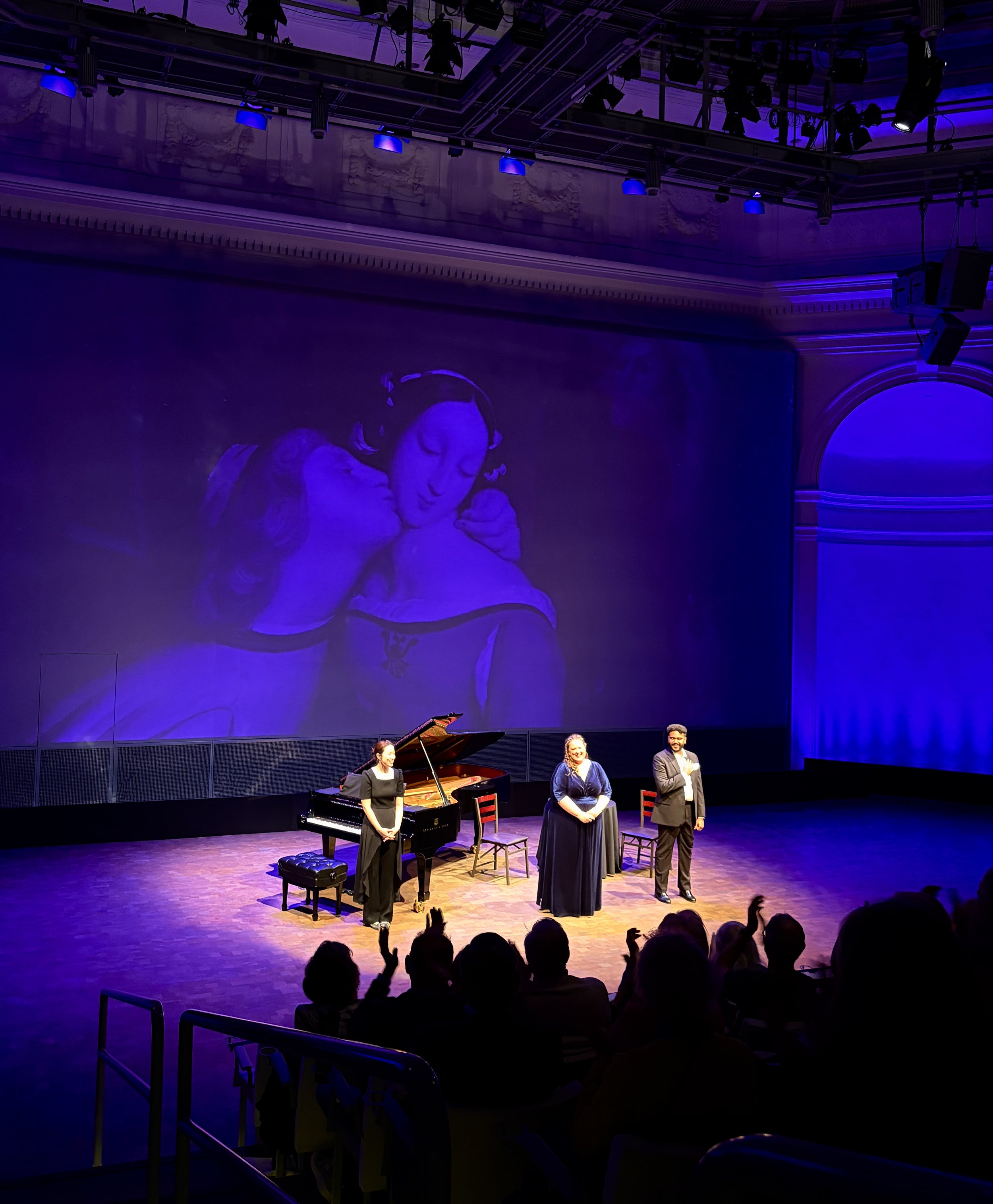
The San Francisco Opera’s Adler Fellows perform as part of the Schwabacher Recital Series
This year’s Adler Fellows took on Hugo Wolf’s Italienisches Liederbuch (Italian Songbook), a Pandora’s Box of 46 songs that represent some of the most precious gems of the repertoire. The group was much smaller than it usually is in other years (only 3), which meant a heavier lift for each of them than usual, and therefore an added intensity to our work together. It was inspiring to witness each of them grow exponentially in their own individual ways over the course of this project. They rose to a Herculean challenge, delivering performances that were as compelling as they were hard-won.
This theme of master-always-is-student bled throughout the month of April. I was most likely hyper-sensitive to it because of the way the month began, but also it just seemed to be in the atmosphere. The morning after the Adler recital, I flew to Ann Arbor to begin the intense task of cleaning out my parents’ beloved home of nearly 40 years, where I spent most of my own student days. My mother was a fastidious archivist, keeping every elementary school teacher report, program booklet, piece of homework, art project, and countless photos. Sifting through these things, I came across old term papers, essays, and my quarter-size violin that I started playing when I was 4 years old. I often am plagued with anxiety that I don’t know enough in any given situation, especially as a musician or a writer, and the experience of being immersed in the paraphernalia of my childhood and adolescence reminded me that I, too, just like those Adler Fellows, simultaneously know a lot and also am keenly unaware of how much I know and don’t know.
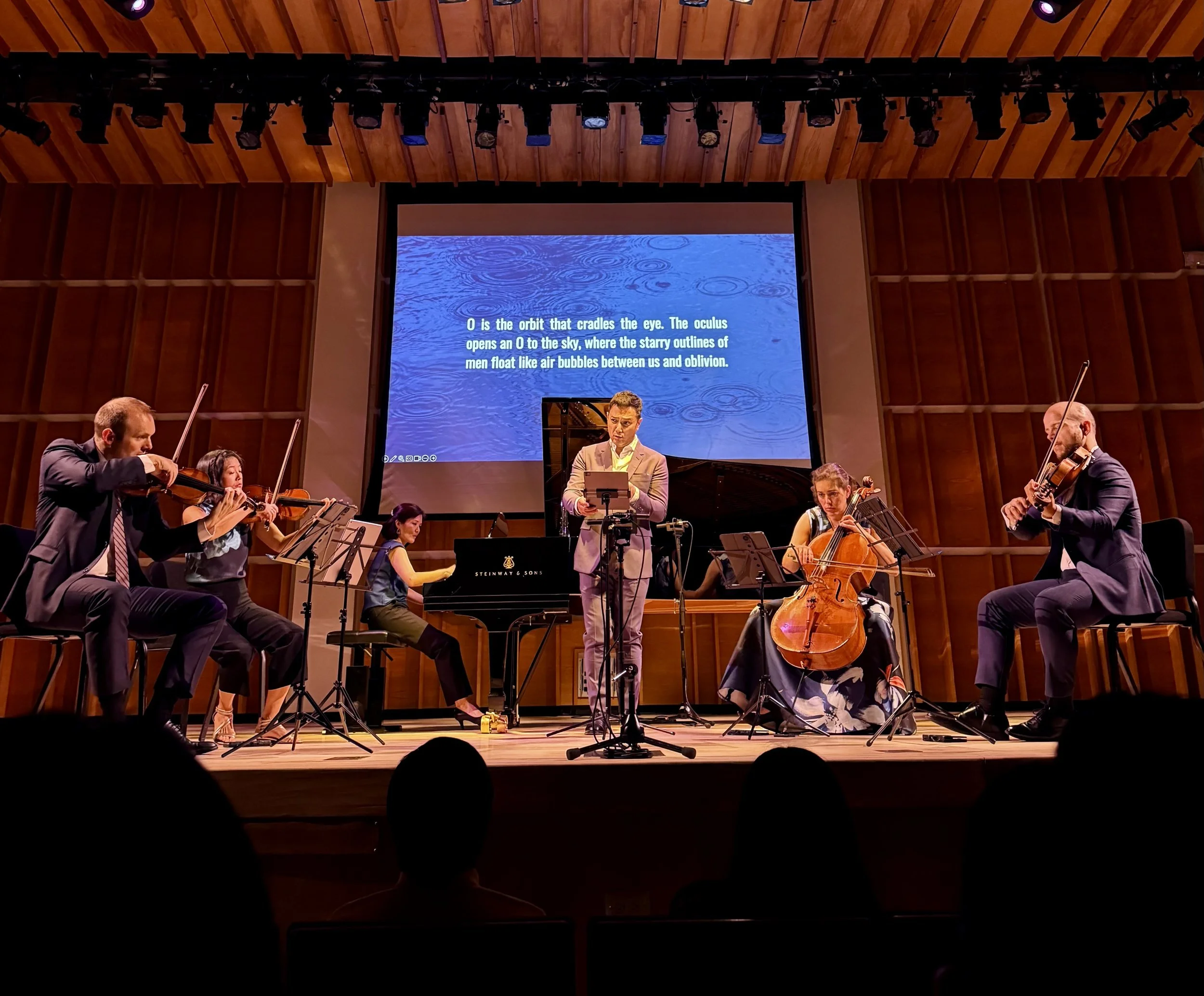
Performing the world premiere of Lamenting Earth at the Kaufman Music Center in May 2024
My most recent album with Myra Huang and the Jasper String Quartet, Lamenting Earth, came out in the middle of the month, and it also was on theme, as the entire project was borne out of my artist residency at the Kaufman Music Center in New York City a couple of years ago. The title work, a new cycle by Vivian Fung, was created in partnership with the high school students of the Special Music School, who jointly composed the texts for three of Lamenting Earth’s four movements. To add more layers to this, the cellist of the Jasper String Quartet, Rachel Henderson Frievogel, is someone I have known since we were kids — her mother was my orchestra teacher from 6th through 12th grade and one of my primary music teachers of my youth and adolescence. During my residency at the Kaufman Center, I was continually blown away by the sophistication of the Special Music School students — musicians at the opposite end of the spectrum from the Adler Fellows, at the very beginnings of their lives in music. While the level of achievement and ability was naturally far more varied at their early developmental stage, each and every one of them was deeply thoughtful. Adding the poetry composition element for Vivian’s song cycle meant that we were also collaborating as co-creators, with them crafting the texts for me to sing, their much-needed perspectives on our changing climate woven directly into the music. As a result, I feel there is a bright halo of hope in Lamenting Earth’s penumbra. The mindfulness and care housed in these young minds and hearts also contains the promise of a better and more healed future, as these young people become the custodians of whatever legacies we older generations leave in their care.
Emerging from the home of my youth, I returned home to San Francisco where I celebrated mentors and mentorship over a series of gala performances for the Amateur Music Network and Philharmonia Baroque, where we honored my friend and someone I consider a mentor, the conductor Nicholas McGegan. Celebrating Nic, who is perhaps one of the most jolly people I have ever encountered in the world of music, was a treat. A couple of weeks later, another person who I considered a friend and a mentor in San Francisco passed away after a long illness, Michael Tilson Thomas. Both Nic and Michael were key figures who helped me feel artistically and personally at home in the Bay when I moved from New York City over a decade ago, and losing Michael is a profound loss for all of the world of music. I will miss MTT’s quirky sense of humour, his incredible personal stories of composers like Leonard Bernstein and Igor Stravinsky, as well as his boundless curiosity and fastidious attention to detail, which was always in service of finding a deeper understanding and more layers of meaning in any given piece of music.
At the Amateur Music Network gala, I performed Schubert’s iconic hymn to the healing power of music, An die Musik, incidentally a song that my voice teacher at the University of Michigan used to teach me how to learn music as a singer when I was making the switch from violinist to tenor as a teenager. Introducing the song and my history with it, I reflected to the crowd of supporters that the process of learning is really never finished for us as musicians and artists. The root of the word amateur is directly connected to the Latin word for “love” (amare). No matter how advanced we venture into our profession, we continue the study of the art out of our love for the form, and the musicians who most inspire me are, like Nic and MTT, the ones who are constantly studying their scores, never losing their sense of wonder at the musical marvels contained within them. Ultimately, all of us are always amateurs, no matter whether or not we enter the professional sphere.
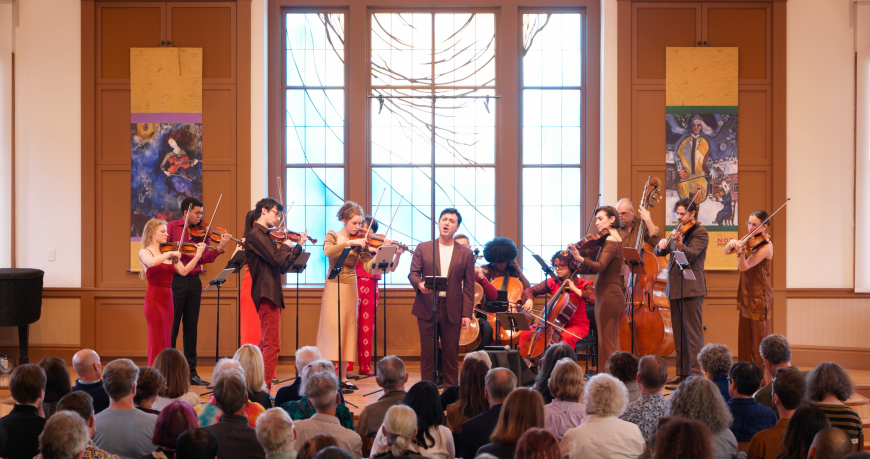
Performing A Change Is Gonna Come with Palaver Strings at Noe Music in San Francisco
April also ended with a chance to reunite with my dear friends Palaver Strings for a mini-tour of A Change Is Gonna Come. A group of 13 string players who all act as co-artistic directors, I often find myself feeling that they represent the future of classical music. A musician-led collective with the mission of inspiring and strengthening communities through music, they not only perform all over the United States, but also operate a community music center that offers a wide range of musical training opportunities for people of all ages in Portland, Maine, where they are based. Performing A Change Is Gonna Come with them is always a uniquely intense experience, as the program celebrates music as a form of protest, and challenges the listener — and us — to ask ourselves what we are fighting for, and whether we are doing enough to advocate for our vision of a better world. Maya French, one of Palaver’s founding violinists and executive director, always points out to our audiences that protest isn’t just about amplifying acts of resistance; it’s also about learning to appreciate the value of dissent — something that Palaver, as a collective of 13 co-artistic directors with 13 distinct perspectives and opinions, contends with on a daily basis. Despite the discomfort that arises from the inevitable friction of their model, they persist until they can find consensus and common ground, knowing that when they do, they are doing so in service of so many things greater than any of their individual selves.
There is much to learn from them, and I do every time we reunite.
In the end, it feels somewhat fitting that April, a month that signaled a slow return to Spring and its promise of renewal, was insistent on reminding that the most important thing any of us can do, at whatever stage of the journey, is to remain genuinely open to being taught. The master is always the student. And if we are lucky, we are always, in the best sense of the word, amateurs.