On Winterreise, Bach, and the Baroque lessons our age has forgotten
NOTE: I am now publishing these monthly newsletters here, mailing more comprehensive newsletters via MailChimp, and also publishing them at my new Substack. If you wish to receive these in your inbox, please subscribe via one of the buttons below!
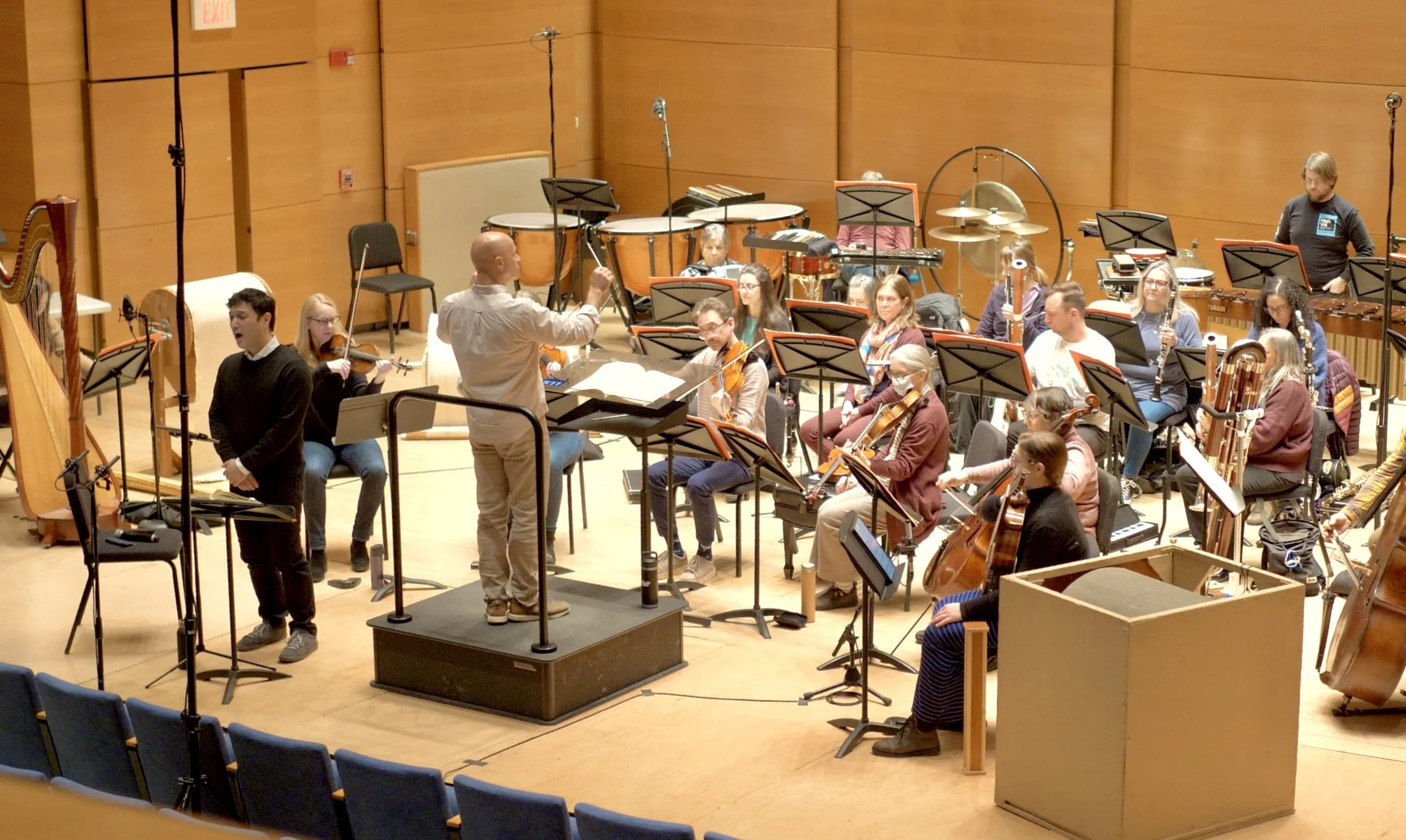
Rehearsing Hans Zender’s re-imagination of Schubert’s Winterreise with Emmanuel Music in Boston
AN APRIL 2026 Newsletter
March brought unseasonably warm weather to the Bay Area, which held a disturbing paradox that was hard to make sense of. While it was incredibly beautiful to bask in the warmth of the sun and clear blue skies, we were all keenly aware of what a dangerous sign this seems to portend for the summer to come. Despite this unseasonal heat wave, I still managed to get an extra dose of winter myself, both in terms of repertoire and weather, traveling to Boston to join my friends at Emmanuel Music for Hans Zender’s wild orchestral re-imagining of Franz Schubert’s Winterreise (Winter’s Journey), where the East Coast was enduring its final blasts of a season that seems to have been harsher than usual.
Sinking into the waves of sadness contained in Schubert’s cycle of poems by Wilhelm Müller, it always strikes me what a paradox it is that both composer and poet seem to have such a clear-eyed view of the experience of grief-induced mental illness. I would imagine that a descent into madness is a more bewildering and chaotic experience, with the distinct sensation of feeling powerless and out of control. Yet Winterreise’s protagonist almost seems to choose madness in the end, encountering an unhoused, dissociated street musician busking with no money and seemingly unaware that he is surrounded by a pack of starving stray dogs, and opting to follow him into that existence. Against the backdrop of our nation’s leaders consciously opting for chaos — holding our airports hostage, casually waltzing toward world war seemingly on a whim — Schubert’s voluntary journey into madness felt like a mirror held up to our own collective choice of insanity.
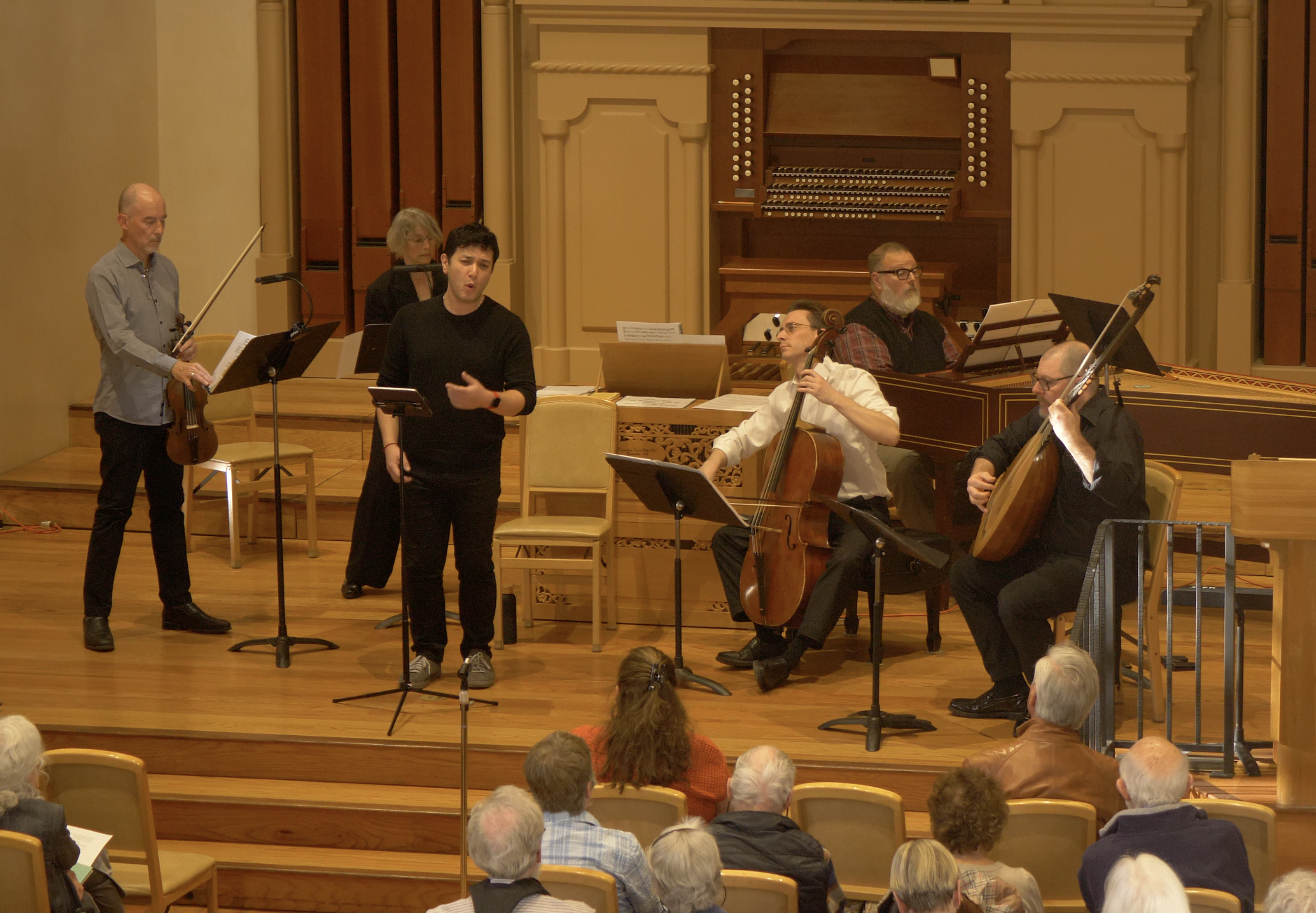
Performing with Santa Fe Pro Musica
This sense of deliberately-embraced chaos, and the question of how we maintain hope within it, became the thread I found running through everything I encountered this month. Revisiting the music of Bach, Buxtehude, and Strozzi in Santa Fe at the end of March, I was constantly reminded of how closely the Baroque and Renaissance periods mirror our own moment. Those decades were also years of rapid social change and endless wars, and there are important lessons contained in the art of those periods. I stumbled across a fascinating Substack essay by the scholar Liz Bucar, in which she engaged with a thought-provoking idea from a recent Trevor Noah interview: that perhaps the absence of religious frameworks in Left politics has cost us a valuable skillset — the capacity to simultaneously hold space for the warts of our current reality and a genuine belief in the possibility of a better future.
It’s a capacity I see demonstrated again and again in Bach. In more than a few of my BACH 52 interviews, guests have said that they see in his music evidence of an order underlying the universe — a rationale to the bewildering morass of lived existence. And working through 52 of his cantata arias for the project, I find that while there is indeed order in his music, there is also chaos. There are measures that contain what feels like a Pandora’s box of wild harmonic progressions, almost indecipherable on first read. And yet, every time, once you take the time to dissect those measures and piece them together, Bach’s logic becomes evident. He is always working to contain both the disorder and the unity — not to eliminate one in favor of the other, but to hold them together.
This is, I think, something our age has largely lost the skill to do. In a time of rapid scientific advancement, in which we gain knowledge with almost hyper-velocity, we easily forget that the scientific method is really about making guesses and systematically testing whether they’re right or wrong. And even after those tests are run and the results analyzed, there is still so much we don’t know. As we have lost sight of those infinite unknowns, dazzled by the vast number of discoveries arriving every day, we have drifted toward a belief that chaos doesn’t exist unless we make it so — that we can control everything within our purview. This has been building for centuries, from Enlightenment philosophies of a binary world to the algorithms that now feed us only more of what we already want to see and hear. The art of the Baroque is a corrective to all of that. It reminds us that chaos is always beside us, that there is so little we can actually control in a life — all while giving us tools to maintain hope in terrifying times. Skills I think we could all use right now.
Speaking of hope: one of the highlights of my time at home is getting to work with the exceptionally talented Adler Fellows at San Francisco Opera. Each season, I work with the second-year fellows as they prepare for their annual recital. Recitals are a uniquely personal opportunity for singers and pianists to stretch their artistic wings and discover how to communicate their singular visions through music. Helping them discover the tools to unlock and communicate those parts of themselves is a special honor. My work with this year’s cohort culminated in their recital earlier this week, and witnessing the strides forward they made was a genuine beacon of hope, especially at a moment when so many worry for the future of our classical art forms.
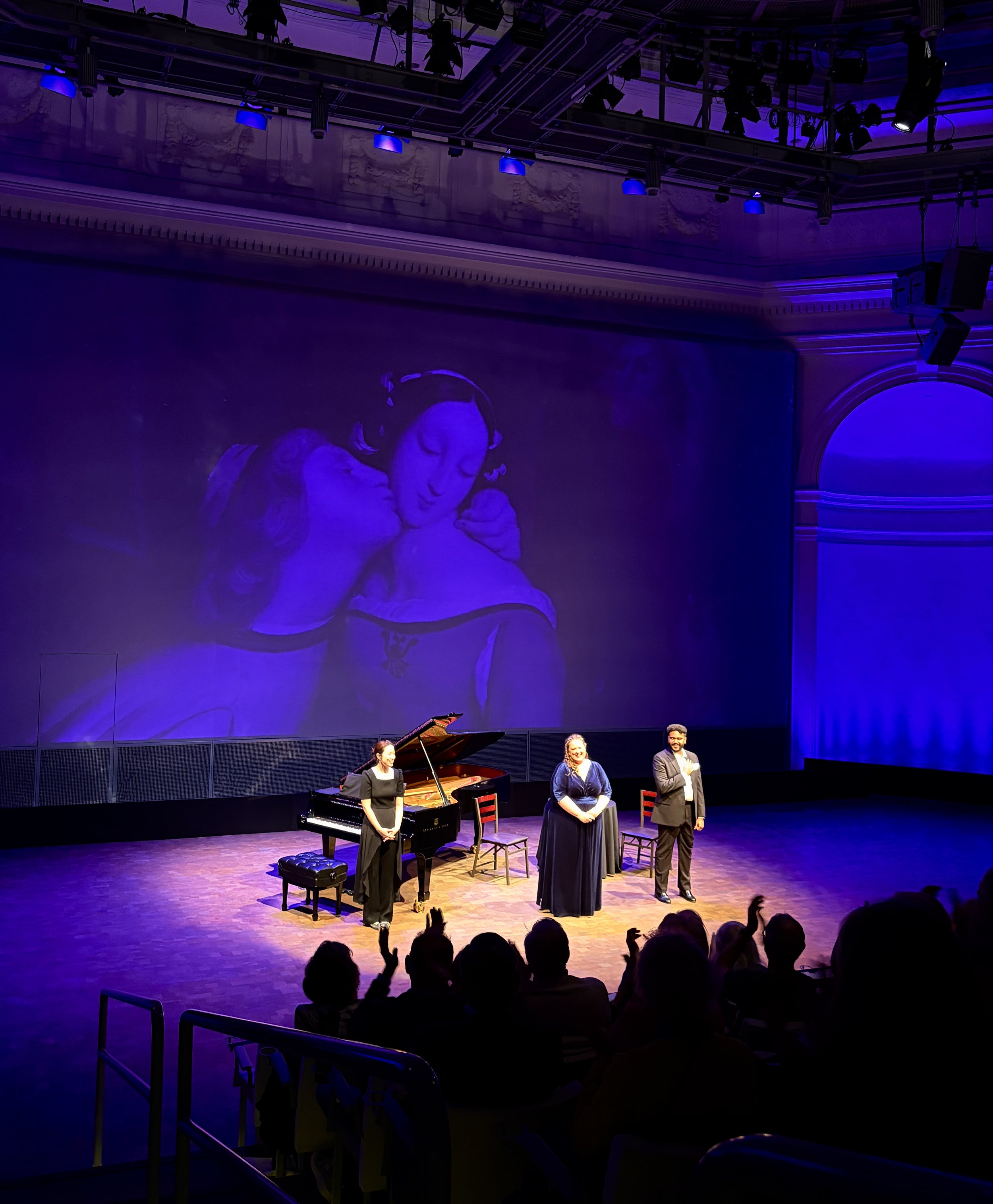
The San Francisco Opera’s Adler Fellows perform as part of the Schwabacher Recital Series
Along with the return of Spring, April brings a reunion with my dear friends at Palaver Strings for a mini-tour of the Bay Area with our A Change is Gonna Come program. While the concept was born during the pandemic, when it felt like the world was as on fire as it could possibly be, the program’s relevance continues to feel — sadly, enragingly — only more urgent with time.
Wishing you a wonderful April ahead, and I hope to see you somewhere, either online or in person.