The Wrong Season
Returning to Schubert's Winterreise after a long winter
NOTE: I am now publishing these essays here and also publishing them at my new Substack. If you wish to receive these in your inbox, please subscribe via the button below!
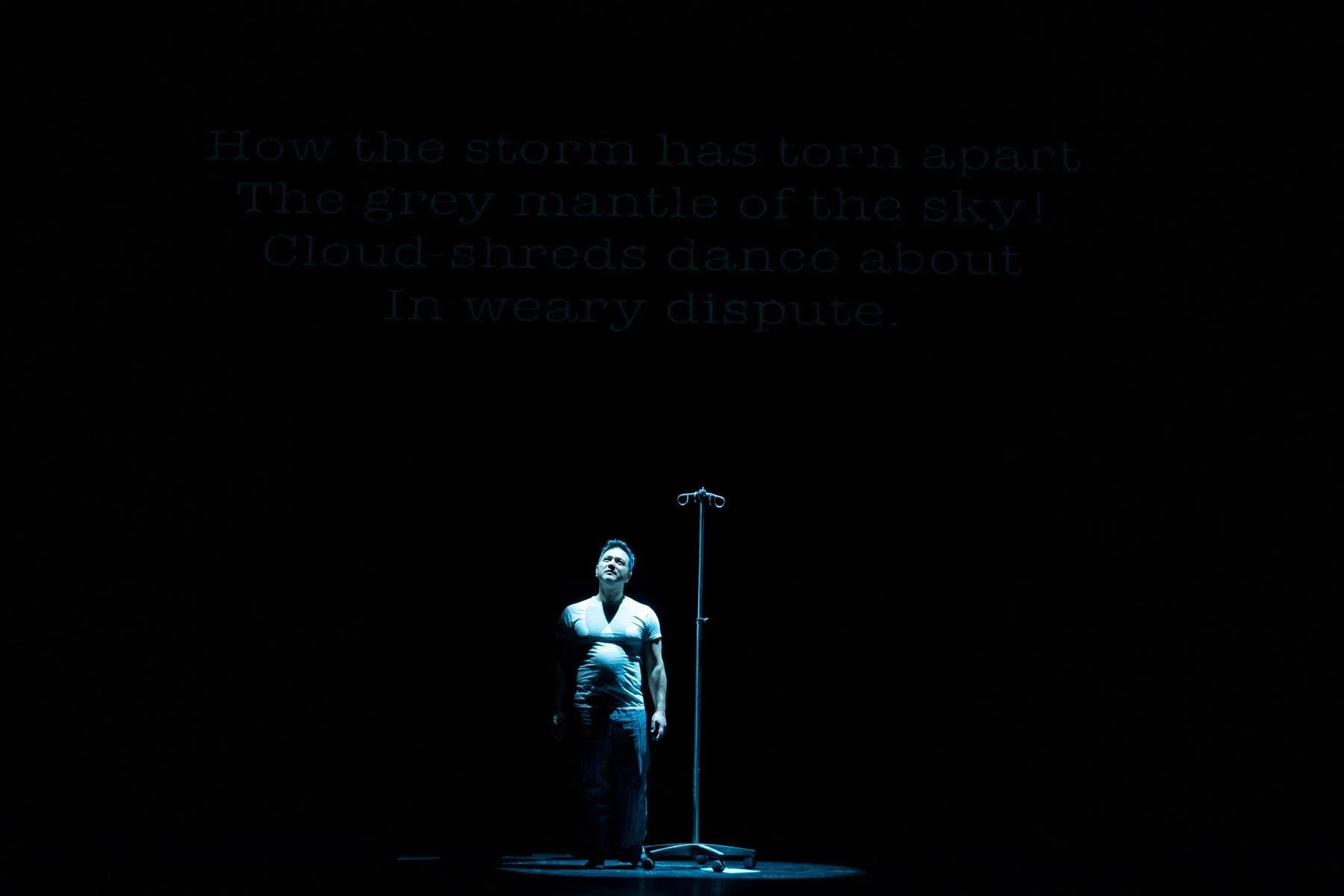
Performing Schubert’s Winterreise with Mercury Chamber Orchestra in Houston, TX in February 2020
As I was packing last night for this week’s trip to Boston, a houseguest asked me when I had last performed Schubert’s Winterreise. It was a factoid I had not really thought about in preparing for this weekend, and the answer caught me off-guard: the summer of 2022, a decidedly unseasonal time to be singing a song cycle called Winter’s Journey. It was early June, and the indecisiveness of spring showers and moderate temperatures was beginning to give way to the heavier heat of summertime. It was a busy period, with musical stops in Nashville and New York City, culminating with a visit back in my childhood stomping grounds of Southeastern Michigan, where I was to perform the song cycle at the Great Lakes Chamber Music Festival with the festival’s music director, Paul Watkins, who was taking the unusual step of performing as a pianist for this performance, alongside a piece of video art produced by choreographer and video artist, Peter Sparling.
Leaving San Francisco always means leaving behind its strange exemption from seasons. Step off a plane almost anywhere else in the world and you are reminded, forcefully, that weather is a real thing — winter’s cold, summer’s heat, the particular oppressiveness of Midwestern humidity in June. As I was packing to leave San Francisco for this multi-city jaunt, the idea of preparing to sing Winterreise as the heaviness of a Midwestern summer was settling felt like a perversely timed venture. However, shortly after landing in the heat of my first stop in Nashville for a string of Mozart Requiems with the symphony there, my father called to tell me that my mother had suffered a stroke over the weekend and was in the hospital. Thus began my own wild journey into perhaps one of the most painful periods of my life to this point.
I asked my father what he wanted us to do and how we could support him. It would have been more than understandable to cancel the next ten days of concerts and recordings and fly straight to Michigan. He implored me to stick to my schedule, saying there was nothing any of us could do but let the doctors take care of my mother and hope for the best. In those early days, while I sang Requiems in Nashville, he was doggedly optimistic she would recover and be okay. Sadly, around the time I was finishing in Nashville and preparing to head to New York, my mother suffered a second stroke, this time leaving her paralyzed through much of her body, unable to speak or eat.
Again, my father insisted I keep my schedule. And so I waded through my few days of concerts and recording sessions in New York before rushing to the airport, impatient to get to my parents’ side in Ann Arbor. I arrived the night before my first performance of Winterreise at the Detroit Institute of Arts — finally able to be at my mother’s bedside. After days of updates by phone, seeing her in person was a shock: the palsied, slackened left side of her face, the tubes helping her breathe, eat, stay hydrated. With nothing to do but wait and see if and how she might recover, I made my way to Detroit the next morning for our matinee.
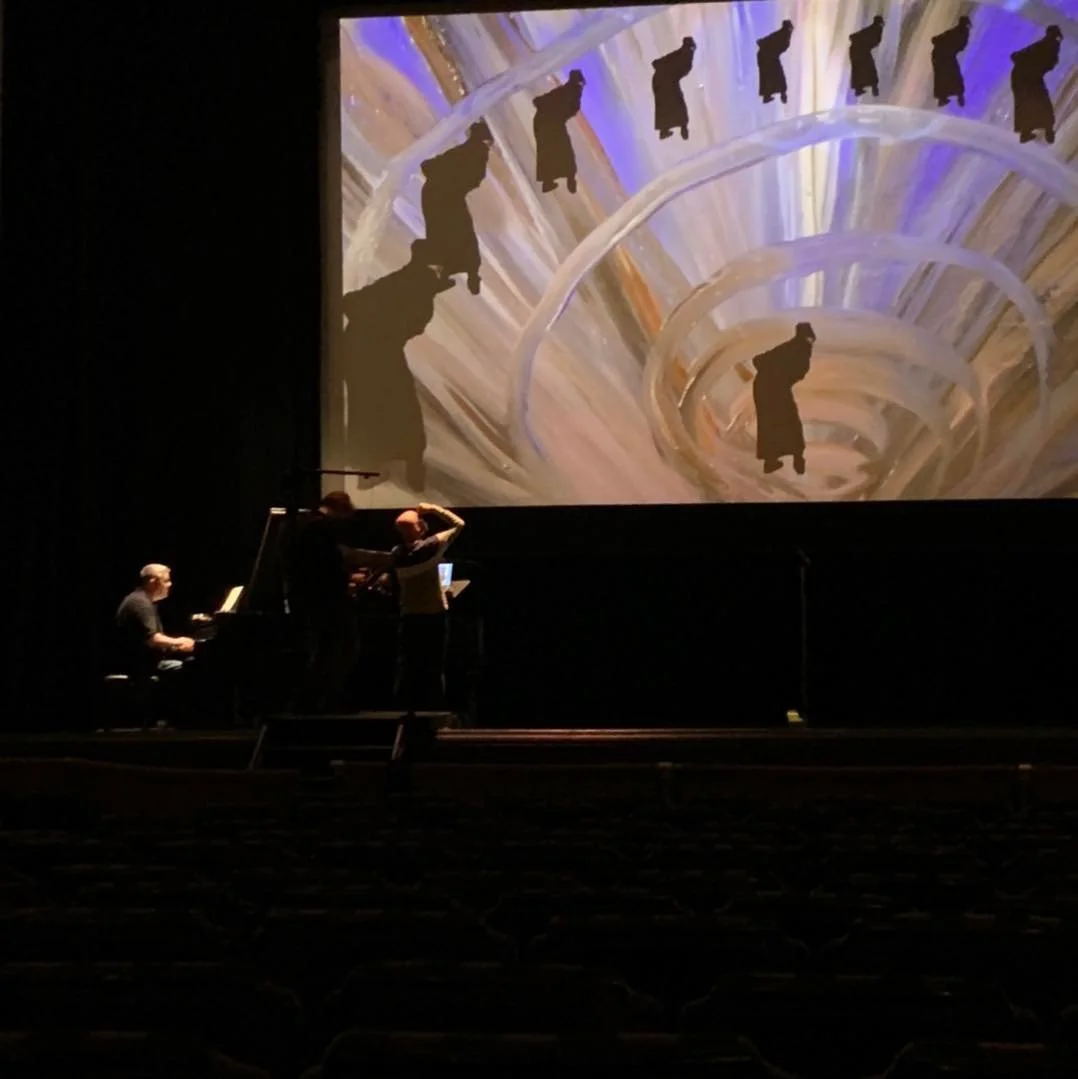
Technical rehearsal for Schubert’s Winterreise at the Detroit Institute of Arts as part of the Great Lakes Chamber Music Festival in June 2022
Those summer concerts at the Great Lakes Chamber Music Festival, while strangely timed, were a blessing that week. They all passed by in a blur, but it was such a gift to have the respite and balm of music in those trying early days of my mother’s final chapter of her life. So often, a professional life in music rips us away from our families and loved ones at the most important moments, both of celebration and lamentation. Yet, somehow my musical life brought me to my family in perhaps the most important moment of all. Looking back on it, I think my father’s insistence that I keep my schedule was partly his taking care of me, and that despite his complete focus on my mother, he also knew that I needed music in my life in this most terrifying and painful of moments. Rather than sinking into an abyss of anxiety and despair, those musical interludes kept my spirit afloat, allowing me strength and energy as I spent every other waking moment at the hospital. My father, meanwhile, refused to leave her side for the entirety of her extended six-month sojourn there, until she was transferred to home care as autumn dissolved into the cloudy, wet greyness of Michigan winter.
While it is clear that the wound that causes Schubert and Wilhelm Müller’s protagonist to set off on his winter’s journey is the breakup of a serious relationship, the cycle fairly quickly becomes a general meditation on grief, and on the costs it bears on heart, mind, and soul. The woman who caused all this pain is notably not mentioned at all during the second half of the cycle, which from there depicts a sharp descent into depression, without a hope in sight of relief. By the end of the cycle, the protagonist has resigned himself to the unending weight of his grief, almost looking towards madness as the only possibility of escape.
I waited decades before attempting to sing Winterreise, as I was keenly aware that it was important to have lived a bit of life before one is ready to perform the piece. After having navigated the last few years of a long winter in my own life — my parents’ decline and passing — it is intense to re-acquaint myself with the cycle’s depths, and to also learn Hans Zender’s orchestral reimagining of the work, which we will perform this weekend at Emmanuel Music. Zender’s encounter with the work goes well beyond an orchestration of the piece, almost shattering entire swaths of it and restitching it together like the shards of ice that Müller repeatedly describes in his poetry as frozen tears. As intense as it is, each time I encounter the end of the work, I realize that part of the reason I don’t have to court madness in the way Schubert and Müller’s protagonist does is that I have had the gift of this music to process so much of this pain, and to be reminded frequently of the many blessings and privileges of this life. Schubert left us something extraordinary with these songs, among the last he wrote before his own life ended too soon. While it is heavy to sit with them, I wonder if perhaps their most important contribution to the world is that they are a beautiful and poignant reminder that we are not alone in the soreness of our hearts and minds, that to hurt is to be human, and that embedded in that pain is the potential for connectedness and healing.