Is Music Something You Buy, or Something You Do?
Recording producer Lolly Lewis on why music was never meant to be owned
We tend to measure the value of things by how long they last. A house outlasts a vacation. A recording outlasts a concert. So we build our economy of meaning around permanence — and anything that vanishes the moment it happens gets categorized as less meaningful, less worth our investment, less valuable. The result of this kind of thinking is that we end up treating music as a product to be sold and consumed. That may give music a value our capitalist society recognizes — though barely worth pennies in this age of streaming — but it’s also made most of us into passive listeners. Most of us have lost touch with what it means to live inside the music itself: creating the sounds, experiencing it as an active participant, not just receiving it.
Lolly Lewis, recording producer and founder of the Amateur Music Network, sits right at the meeting point of those two ways of relating to music. As a producer, she is the person in the booth capturing performances so they can last, turning something fleeting into a file, a recording, and—when she is making commercial recordings—transforming it into a thing you can own and replay. In fact, she’s recorded the audio for the majority of BACH 52’s aria sessions. But through the Amateur Music Network, the San Francisco nonprofit she founded to pair amateur musicians with professional mentors, she’s spent years building programs that make playing, singing, and making music accessible to everyone, regardless of skill level — opening the door back into that active, participatory experience: standing inside the music as it happens and disappears in real time, never to be repeated in exactly that way again.
Lolly’s conclusion: music was never meant to be a thing we buy. It’s a thing we do. And the experience of doing it — together, in a room, for however many minutes or hours that will never come back — doesn’t lose value because it doesn’t last. In fact, it might be the only kind of value that was ever real to begin with.
Chatting with Lolly about the value of active experience versus passive consumption in music, it had me thinking of the tenor aria from Cantata 26, So schell ein rauschend Wasser fließt, which features at the end of this episode. Living in a time when average life-expectancy hovered in the mid-30s, and having lost half his children well before they reached adulthood, Bach knew something about the fleeting nature of time and the value of lived experience. It’s perhaps one of the reasons he was so prolific in his work. In this aria Bach meditates on a single image — rushing water, hours collapsing into an abyss, a life that won’t slow down for anyone — that he paints with seemingly endless roulades that are traded off between a flute, a violin, and the tenor voice (and even occasionally the bass lines in the organ and cello). I’m not sure it offers any sort of comfort, or resolution, but it’s an elegant acknowledgement of the indisputable fact of time running out from under us.
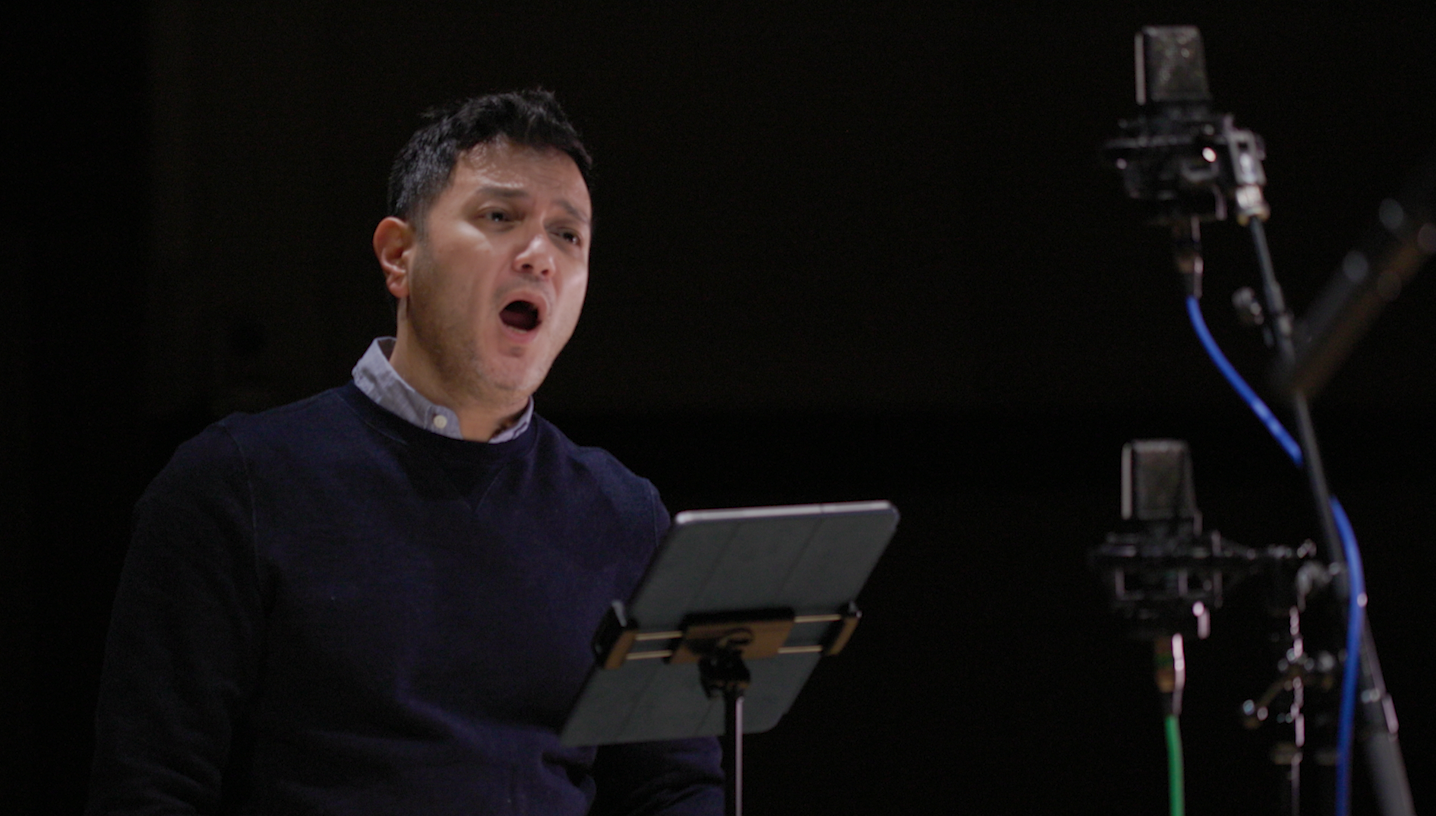
Recording BWV 26 at the San Francisco Conservatory of Music
EPISODE CREDITS:
So schnell ein rauschend Wasser fließt from BWV 26
PERFORMERS
San Francisco Conservatory of Music Baroque Ensemble | Elisabeth Reed & Corey Jamason, directors
with members of Philharmonia Baroque Orchestra
Violin: Carla Moore*
Flute: Stephen Schultz*
Cello: Samantha Adams
Organ: Corey Jamason
*denotes member of Philharmonia Baroque Orchestra
SOUND (BWV 26 only): Lolly Lewis | VIDEO (aria & primary interview only): Clubsoda Productions
Episode 18 was made in partnership with the San Francisco Conservatory of Music and Philharmonia Baroque Orchestra & Chorale. BACH 52 is made possible in part by grants from the American Bach Society, the Center for Cultural Innovation, the Bettina Baruch Foundation, and Intermusic SF.
BACH 52 is a production of Nicholas Phan Recording Projects, which is a sponsored project of Fractured Atlas, a non-profit arts service organization.
Charitable contributions in support of Nicholas Phan Recording Projects and the BACH 52 project must be made payable to “Fractured Atlas” only and are tax-deductible to the extent permitted by law.